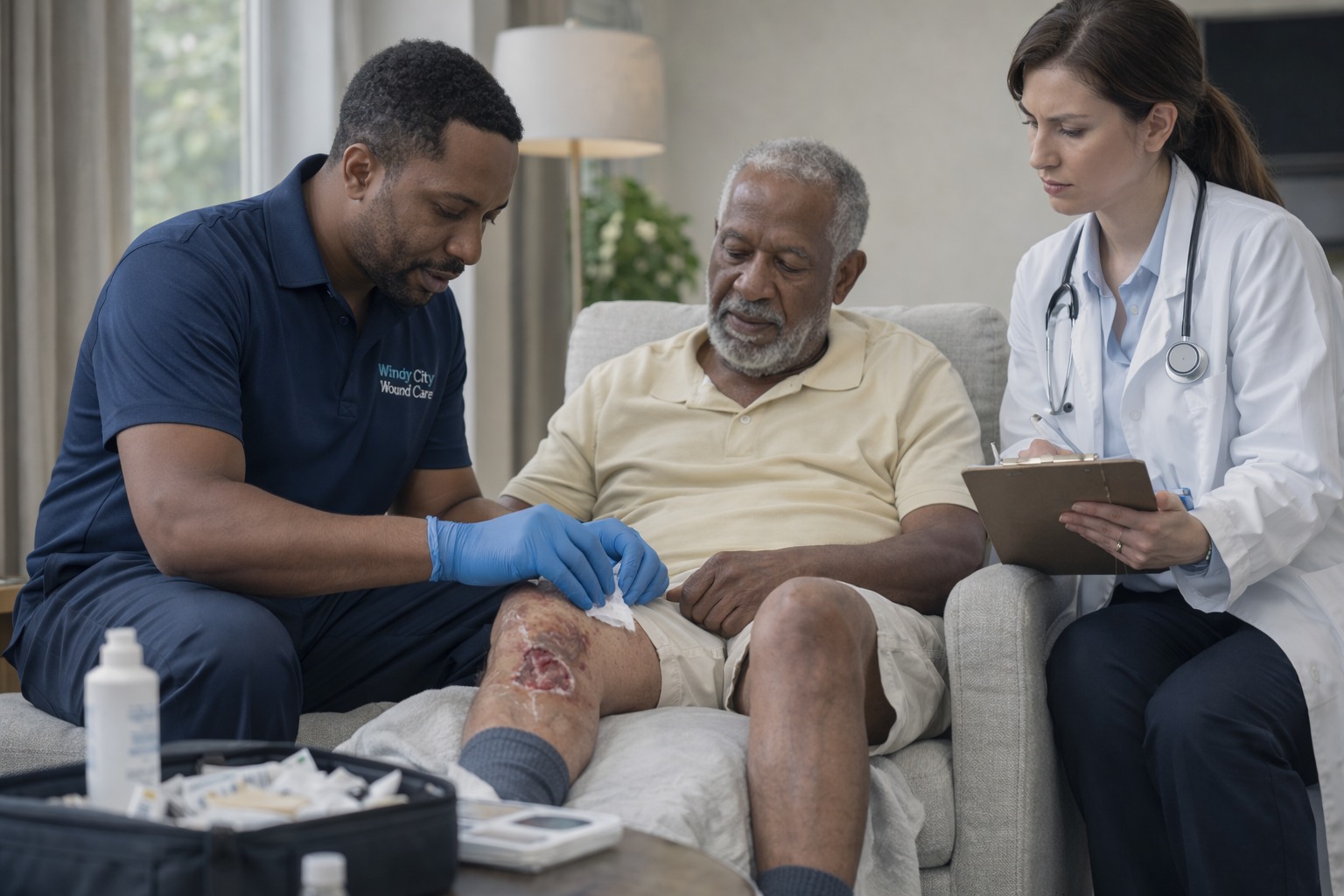
Most wounds follow a predictable healing trajectory. With appropriate pressure management, moisture balance, and infection control, tissue progresses from inflammation to proliferation and eventually closure.
However, not all wounds follow this path.
Some wounds remain biologically stalled despite consistent care. Others deteriorate gradually as underlying factors such as perfusion deficits, pressure forces, or inflammatory burden persist uncorrected.
Recognizing when a wound requires specialist involvement is critical to preventing prolonged morbidity, avoidable hospitalizations, and escalating treatment complexity.
Advanced wound care is not simply about applying new products. It is about reassessing the biologic environment of the wound and introducing therapies designed to restore forward healing.
The Four Week Healing Benchmark
One of the most widely used clinical indicators for referral is failure to demonstrate measurable progress within four weeks of appropriate treatment.
A wound that is not reducing in size, improving in tissue quality, or stabilizing at the edges after several weeks often indicates that one or more underlying drivers of non healing remain unresolved.
These drivers may include:
• Undiagnosed peripheral arterial disease
• Persistent inflammatory protease activity
• Chronic biofilm formation
• Unrecognized pressure or shear forces
• Moisture imbalance or dressing mismatch
At this stage, continued routine care alone rarely produces meaningful improvement.
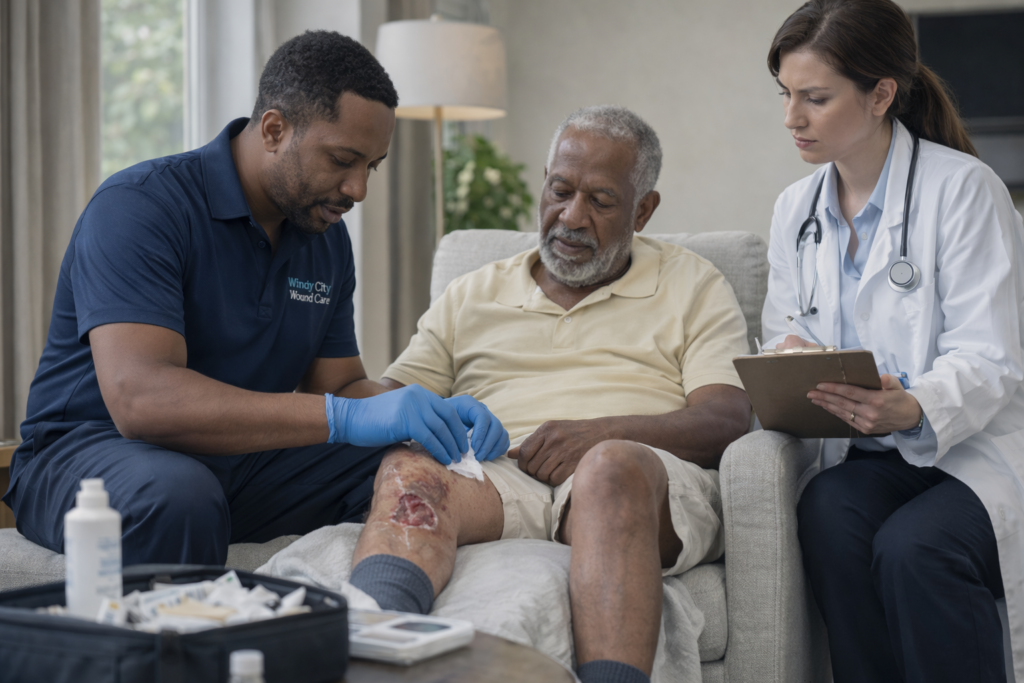
Signs a Wound May Require Specialist Evaluation
While time is an important indicator, there are several clinical patterns that should prompt earlier referral.
1. Lack of Measurable Progress
A wound that appears active but fails to demonstrate consistent reduction in size or depth may be biologically stalled.
Granulation tissue may appear intermittently, yet epithelial migration does not advance and the wound edges remain fragile.
2. Recurrent Infection or Persistent Bioburden
Frequent infection cycles, increasing drainage, or persistent odor may indicate biofilm presence or deeper microbial burden that requires targeted intervention.
Specialist teams often use structured debridement strategies and advanced therapies to disrupt this cycle.
3. Exposed Structures
Wounds involving tendon, bone, fascia, or hardware require careful management to prevent deterioration and maintain tissue viability.
These wounds frequently benefit from advanced biologic materials and negative pressure therapies that support tissue regeneration.
4. Complex Etiology
Some wounds have multiple overlapping causes such as diabetes, vascular disease, pressure injury, and edema.
When these factors interact, wound progression becomes unpredictable without coordinated management.
5. Failure of Standard Treatment Approaches
When standard dressings, routine debridement, and topical antimicrobials fail to produce progress, advanced biologic or regenerative therapies may be necessary.
These interventions must be selected and timed appropriately within the healing process.
The Cost of Delayed Referral
Delayed specialist involvement often results in wounds that become progressively more difficult to treat.
Extended inflammatory states can lead to:
• Tissue breakdown and wound enlargement
• Increased infection risk
• Greater likelihood of hospitalization
• Higher probability of surgical intervention or amputation
Early specialist evaluation can often simplify the treatment pathway before complications develop.
What Advanced Wound Care Adds
Advanced wound care teams provide capabilities that extend beyond routine dressing changes.
This often includes:
• Physician directed sharp debridement
• Advanced biologic graft and extracellular matrix therapies
• Negative pressure wound therapy optimization
• Perfusion and vascular evaluation coordination
• Structured healing monitoring and documentation
These interventions are selected based on the biologic phase of healing and the underlying drivers preventing progression.
A Collaborative Approach
Referral to advanced wound care does not replace the patient’s existing care team.
Instead, it functions as a clinical extension of the healthcare system, working alongside physicians, surgeons, home health agencies, and caregivers to stabilize the wound environment and restore healing momentum.
Once wounds begin progressing reliably, many patients transition back to routine care with improved stability.
When in Doubt, Early Evaluation Helps
Not every wound requires advanced intervention.
But when a wound appears stalled, fragile, or unpredictable, early specialist evaluation can clarify the next step.
Timely assessment often prevents months of unsuccessful treatment and helps patients return to a predictable healing pathway.
Windy City Wound Care provides physician directed advanced wound management in the home for patients across the Chicago region, working alongside hospitals, physicians, and home health agencies to restore healing and reduce avoidable complications.