
There is a line many healthcare professionals have heard in one form or another:
“Your doctor went to medical school for 12 years. The person denying your claim went through a two-week training module.”
It is intentionally exaggerated, but the frustration behind it is familiar.
Every day, clinicians identify patients who need care. A provider evaluates the wound. The wound is documented. A treatment plan is established. The clinical need appears clear.
Then the administrative process begins.
Additional documentation may be requested. Progress notes may be needed. Wound photographs may need to be reviewed. Records may need to be submitted again. A portal request may need follow-up. A peer-to-peer discussion may be requested. A fax may need to be resent because the first one was never received.
Meanwhile, the patient is still waiting.
For a patient with a chronic or non-healing wound, access to appropriate care can feel urgent. Wounds can affect mobility, independence, comfort, caregiver burden, and overall quality of life. The longer a wound remains unresolved, the more important communication, monitoring, and timely clinical coordination become.
At Windy City Wound Care, we believe wound care prior authorization is not simply an administrative task. It is part of helping patients access the treatment their clinical condition may require.
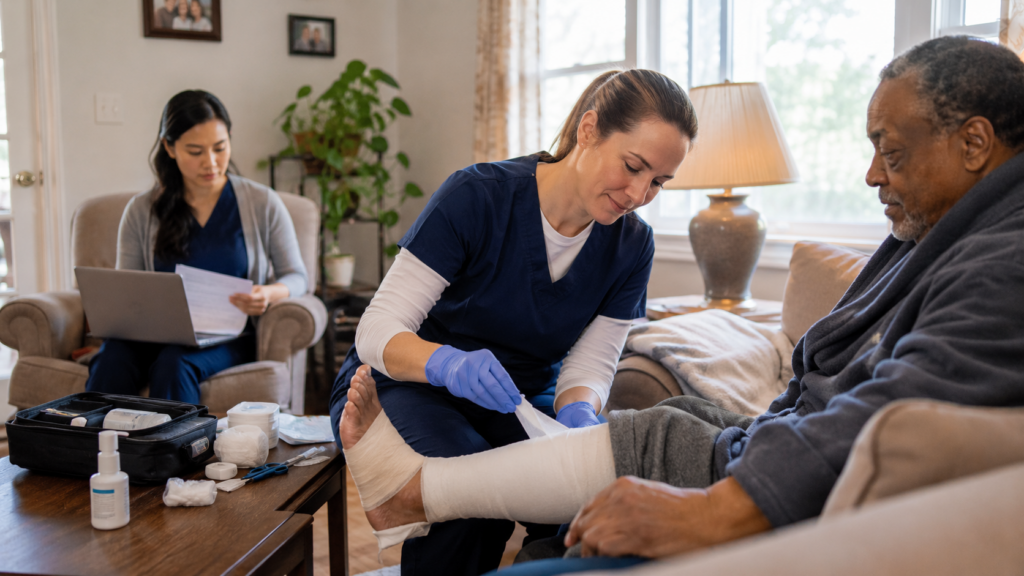
When a Clinical Treatment Plan Meets Wound Care Authorization
Prior authorization is a review process used by many health plans before certain services, supplies, procedures, or advanced therapies are covered.
A provider may determine that a treatment is clinically appropriate. However, the health plan may still require documentation showing why that treatment is medically necessary, why other approaches may not have been sufficient, and how the requested therapy fits into the patient’s overall care plan.
This can create a difficult gap between clinical decision-making and access to treatment.
A Patient Is More Than an Wound Care Authorization Request
A wound cannot be fully understood through one diagnosis code, one photograph, or one office note.
The clinical picture may include:
• The wound’s cause and duration
• Wound location, size, depth, and tissue characteristics
• Drainage, odor, pain, and signs of potential complication
• Diabetes, vascular disease, edema, immobility, malnutrition, or other contributing factors
• Previous treatment attempts and response to care
• Home health involvement and caregiver support
• Relevant vascular testing, surgical history, or hospitalization records
• The need for ongoing debridement, advanced therapies, offloading, compression, or other interventions
The goal of documentation is not simply to complete a form. It is to clearly communicate the patient’s clinical story.

Wound Care Is Only Part of What We Do
Windy City Wound Care provides specialized wound care in the home for patients with chronic, complex, and non-healing wounds.
Our providers evaluate and manage conditions such as:
• Diabetic foot ulcers
• Pressure injuries
• Venous leg ulcers
• Arterial wounds
• Surgical wounds
• Traumatic wounds
• Non-healing lower extremity wounds
• Wounds complicated by edema, infection risk, immobility, or multiple chronic conditions
Our role is not limited to the visit itself.
While providers are focused on wound assessment, treatment planning, procedures, patient education, and clinical monitoring, care coordination continues in the background. That may involve communication with families, home health agencies, referring providers, insurers, suppliers, and other members of the patient’s care team.
What Happens Behind the Scenes After a Referral
Every patient’s needs are different. Depending on the diagnosis, payer, treatment plan, and available records, our team may be working to:
• Verify benefits and eligibility
• Identify whether authorization requirements apply
• Gather and organize supporting clinical documentation
• Coordinate advanced wound therapy requests
• Facilitate communication with health plans and utilization review teams
• Request additional records when needed
• Coordinate with suppliers, manufacturers, and clinical partners
• Communicate with home health agencies and referral sources
• Follow up on pending requests
• Respond to additional documentation requests
• Assist with appeals or reconsideration steps when appropriate
No provider can guarantee insurance coverage, approval, or a specific turnaround time. Coverage policies and authorization requirements can vary by plan, service, location of care, and clinical circumstance.
What we can do is help ensure that the request is clinically organized, appropriately supported, and actively coordinated.
Why Wound Care Documentation Matters
Strong wound care documentation helps create continuity between the bedside, the referral source, the payer, and the patient’s broader care team.
When documentation is incomplete or scattered across multiple organizations, it can slow down communication and create avoidable administrative work. When the record clearly explains the patient’s condition, treatment history, and clinical rationale, it is easier for everyone involved to understand what is being requested and why.
What a Complete Clinical Record May Include
The exact requirements vary, but a well-supported wound care record often includes:
• Wound diagnosis and suspected cause
• Current wound measurements and tissue description
• Wound photographs, when clinically appropriate and securely obtained
• Relevant medical history and comorbidities
• Previous wound treatments and response
• Current dressing regimen and care plan
• Documentation of offloading, compression, circulation assessment, or infection management when relevant
• Clinical rationale for the requested treatment
• Treatment goals and follow-up plan
• Recent progress notes from referring providers or home health clinicians
A complete record does not guarantee a favorable coverage decision. It does, however, help reduce ambiguity and gives the request the clinical context it needs.
Advocacy Is Part of Patient Care
Most people assume wound care begins when the provider arrives at the patient’s home.
In reality, some of the most important work may begin before that first visit ever occurs.
It may start with reviewing a discharge summary, clarifying a diagnosis, verifying insurance information, requesting wound documentation, coordinating with a home health nurse, or determining whether a treatment requires additional review.
It may mean one phone call. It may mean many phone calls.
Clinical Care Happens at the Bedside. Advocacy Happens Everywhere Else.
For patients with complex wounds, care often involves multiple organizations.
A patient may have a primary care provider, a vascular specialist, a surgeon, a home health agency, a caregiver, a hospital discharge team, a payer, and a wound care provider involved at different points in the healing process.
Without strong communication, important details can get lost between settings.
Windy City Wound Care works to help connect those pieces. Our goal is to support the clinical plan, keep referral partners informed, and reduce unnecessary friction wherever possible.
Coverage Requirements Can Differ by Health Plan
Insurance workflows are not identical.
Some plans may require advance approval for certain products, procedures, supplies, or advanced therapies. Some may request specific documentation. Some may require additional clinical review before a decision is made.
This is especially relevant for patients enrolled in Medicare Advantage plans or other managed care plans, where coverage rules and review processes may differ from one plan to another.
For patients and referral partners, that can be frustrating. For our team, it means staying organized, responding to requests promptly, and maintaining a clear record of the patient’s clinical needs.
How Referral Partners Can Help Reduce Preventable Delays
Referral partners already carry significant responsibility. Case managers, discharge planners, home health clinicians, social workers, primary care offices, and family caregivers are often managing multiple urgent needs at once.
When possible, sending key information early can help streamline the intake and review process.
Helpful Information to Include With a Wound Care Referral
• Patient demographics and insurance information
• Recent provider notes or discharge summaries
• Wound diagnosis and current clinical concerns
• Recent wound measurements and wound descriptions
• Wound photographs, when appropriate and submitted securely
• Current treatment plan and dressing orders
• Relevant vascular studies, imaging, or laboratory information
• Medication list and pertinent medical history
• Recent home health notes, if applicable
• Contact information for the referring provider, caregiver, or clinical team
A complete referral does not eliminate every barrier. It can, however, help reduce unnecessary back-and-forth and allow the wound care team to focus more quickly on the patient’s needs.
What Patients and Families Can Expect
Patients and families do not need to understand every coverage rule, payer policy, or authorization workflow.
They do deserve clear communication.
At Windy City Wound Care, we aim to help patients and families understand:
• What the wound care plan involves
• Why a treatment may be recommended
• What information may be needed to support care coordination
• Who is involved in the patient’s care
• What steps are being taken behind the scenes
• When to call with new concerns or changes in the wound
The patient may never see every authorization request, documentation submission, follow-up call, or care coordination discussion.
What they will see is whether someone communicated. Whether someone followed through. Whether someone took ownership of the process.
Frequently Asked Questions About Wound Care Authorization
Does wound care require prior authorization?
It depends on the patient’s insurance plan, diagnosis, location of care, and recommended treatment. Some services, supplies, procedures, or advanced wound therapies may require authorization before coverage is approved.
Does prior authorization mean the patient has been denied care?
No. Prior authorization is a coverage review process. It generally means the health plan needs additional clinical information before confirming coverage for a requested service or treatment.
What documentation is needed for advanced wound care authorization?
Requirements vary, but supporting information may include wound measurements, treatment history, clinical notes, wound photographs when appropriate, relevant medical history, and a clear explanation of why the requested treatment is medically appropriate.
Can home health and a wound care specialist work together?
Yes. Windy City Wound Care works alongside home health agencies and referring providers to support continuity of care. We do not replace home health. We enhance it by providing specialized wound evaluation, treatment planning, procedures, and ongoing clinical oversight.
How long does wound care prior authorization take?
Timelines vary by health plan and the type of request. Complete documentation, responsive communication, and early coordination can help reduce avoidable delays, but approval timelines are ultimately determined by the health plan.
More Than a Wound Care Referral
When you refer a patient to Windy City Wound Care, our goal is not simply to evaluate a wound.
Our goal is to become an extension of your team.
We work to assess the patient’s condition, develop a clinically appropriate treatment plan, coordinate with the broader care team, and help navigate the administrative steps that may stand between a patient and the care they need.
Because healing a wound is important.
Helping patients access the care required to heal it is just as important.
Have a patient with a chronic, complex, or non-healing wound?
Refer them to Windy City Wound Care for physician-led wound care delivered in the home.