
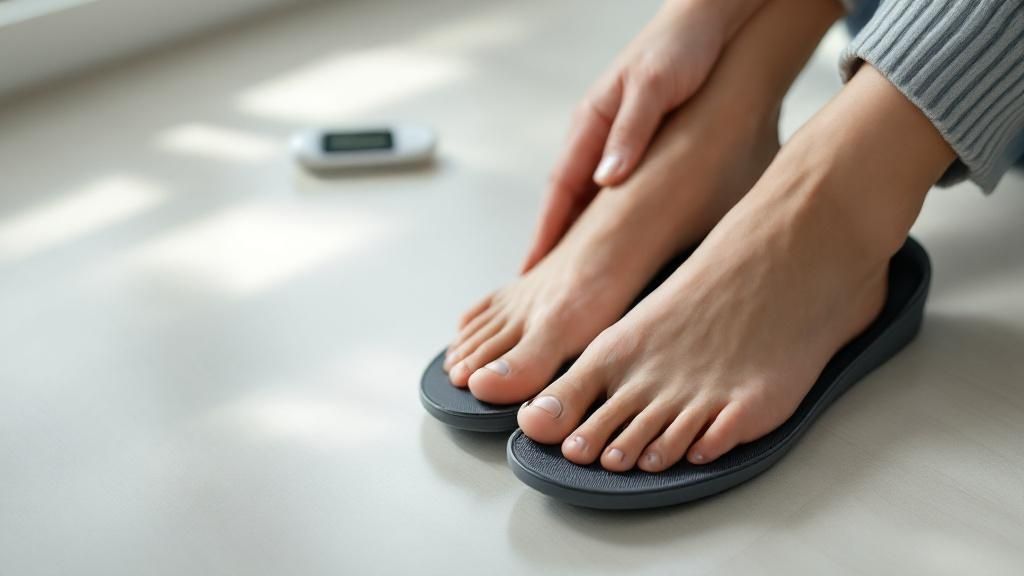
For anyone living with diabetes, the concept of “foot care” can sometimes feel like just one more thing on an already long to-do list. But I want to be very clear: this is much more than a simple suggestion from your doctor. It’s your frontline defense against one of the most serious complications of the disease.
Putting this on the back burner can have devastating consequences that go far beyond your feet.
Why Diabetic Foot Ulcer Prevention Is Not Optional
The tough reality is that diabetes can quietly wage a two-front war on your lower limbs.
First, it often causes nerve damage, a condition we call peripheral neuropathy. This damage dulls sensation, which means you might not feel a small cut, a blister from a new pair of shoes, or even a pebble that slipped inside. What would be a minor, painful annoyance for someone else can go completely unnoticed by you.
At the same time, diabetes can impair your circulation by hardening and narrowing blood vessels. This reduced blood flow makes it incredibly difficult for your body to heal even minor injuries. So, that small, unfelt sore now lacks the blood supply it needs to repair itself, creating the perfect storm for a diabetic foot ulcer to form.
The Sobering Statistics Behind Ulcers
The global impact here is truly staggering. Each year, diabetic foot ulcers (DFUs) affect nearly 18.6 million people worldwide, and that leads to over 1.6 million amputations. Think about that—these ulcers come before roughly 80% of all lower-extremity amputations in people with diabetes.
Even more concerning is the link to mortality. The five-year mortality rate after a DFU diagnosis is around 30%. Tragically, that number skyrockets to over 70% for patients who undergo a major amputation. These aren’t just numbers; they represent lives profoundly impacted.
This isn’t meant to scare you, but to empower you with the truth. Understanding the risk is the first step toward building a defense that works. While these statistics are serious, they also prove how powerful prevention is. The vast majority of these outcomes are not inevitable.
The Four Pillars of Proactive Defense
So, how do you build that defense? The good news is that effective prevention isn’t complicated. It really hinges on consistency and awareness, built upon four essential pillars. I tell my patients to think of these not as separate chores, but as an interconnected system protecting their health and mobility.
We’ve summarized these core strategies in the table below. Integrating these actions into your daily life is the most effective way to protect your feet.
The Four Pillars of Diabetic Foot Ulcer Prevention
| Pillar of Prevention | Daily Action | Why It Matters |
|---|---|---|
| Daily Foot Inspection | Spend two minutes checking your feet for cuts, redness, blisters, or swelling. Use a mirror if needed. | This is your early warning system. Catching a problem when it’s just a red spot is infinitely easier than treating an open wound. |
| Glycemic Control | Monitor and manage your blood sugar levels as advised by your healthcare team. | Stable blood sugar is the foundation. It protects your nerves and blood vessels from the damage that leads to neuropathy and poor circulation. |
| Protective Footwear | Wear well-fitting, supportive shoes and socks. Avoid going barefoot, even indoors. | Your shoes are your armor. They shield your feet from injury, pressure, and friction that can cause skin to break down. |
| Professional Care | Follow up regularly with your podiatrist or a wound care specialist for foot exams. | You’re not in this alone. An expert can spot subtle changes you might miss, providing a professional safety net. |
Mastering these four pillars gives you a robust, proactive strategy for safeguarding your health.
The most powerful tool you have is consistency. I’ve seen it time and time again: a small problem, identified and addressed early, rarely becomes a catastrophe. It’s when these simple, daily actions are neglected that the real danger creeps in.
Of course, even with the best prevention, an ulcer can still develop. If that happens, getting immediate, expert help is crucial. Understanding the modern options for treating diabetic foot ulcers can make all the difference in healing successfully and preventing it from happening again.
By embracing these preventative pillars, you take direct control of your health, turning a potential risk into a manageable part of your daily routine.
Your Daily Foot Inspection Ritual
Let’s be honest, the advice to “check your feet” can sound almost too simple. But I can’t stress this enough: turning this simple suggestion into a non-negotiable daily habit is one of the most powerful things you can do to prevent a diabetic foot ulcer. This isn’t just a quick glance down. It’s a dedicated, focused inspection—your own personal early warning system.
Think about it this way: if you have neuropathy, you might not feel a small pebble that’s been rattling around in your shoe all day. That daily check is how you spot the angry red pressure mark it leaves behind before it has a chance to break the skin and become a real problem.
Consistency is everything. The goal is to make this inspection as automatic and routine as brushing your teeth. I often tell my patients to tack it onto an existing habit. Maybe it’s right after you shower when your feet are clean and dry, or perhaps just before you pull on your socks and shoes for the day. Tying it to something you already do makes it much harder to forget.
What to Look For During Your Inspection
This is a full, heel-to-toe examination. You’re hunting for anything that looks or feels different from yesterday. Pay extra close attention to the high-pressure spots—the ball of your foot, the back of your heel, and the very tips of your toes are common culprits.
Here’s your daily checklist of what to search for:
- Color Changes: Are there any new red spots, dark areas, or patches of unusual paleness? Redness is often the first alarm bell for pressure or irritation from footwear.
- Cuts, Scrapes, or Blisters: No matter how tiny, any break in the skin is a welcome mat for infection.
- Swelling: Look at both feet side-by-side. Does one look puffier than the other? Is there new swelling around an ankle or in your toes?
- Temperature Differences: Use the back of your hand to feel your feet. Any spots that feel unusually hot or cold? A hot spot can signal inflammation or an infection brewing beneath the surface.
- Cracks or Dryness: Dry, flaky skin, especially around the heels, can easily crack open and form a wound.
- Ingrown Toenails: Check the borders of your nails for any redness, swelling, or tenderness where the nail digs into the skin.
This infographic highlights a closely related habit—choosing the right shoes—which has a massive impact on what you might find during your daily check.

As the visual shows, preventing pressure sores starts before you even put your shoes on. A proper fit and a smooth, seamless interior can make all the difference.
Tools and Techniques for a Thorough Check
Let’s face it, not everyone can easily bend over and get a clear view of the bottom of their feet. If mobility issues or poor vision are a challenge, please don’t let that stop you. You just need the right tools for the job.
The most dangerous wound is the one you can’t see. Using a tool to help you inspect every inch of your feet isn’t a sign of weakness; it’s a sign of commitment to your own health.
A long-handled inspection mirror is a game-changer. You can find them at most drugstores or online pretty cheaply. Just sit comfortably in a chair, place the mirror on the floor, and hold your foot over it. This lets you see every angle of the sole and heel without straining. A large, unbreakable handheld mirror works perfectly well, too.
If your vision is the main issue, don’t be afraid to ask for help. A spouse, partner, or trusted family member can be a huge asset. Ask them to perform the check for you at the same time each day. This shared responsibility can be a great motivator for both of you.
When a problem is found, you have to act fast. Seeking expert wound care in Chicago or in your local area right away can stop a minor issue from spiraling into a major complication. Never, ever assume a small sore will just “heal on its own.”
Selecting Footwear That Actively Protects
Your shoes are so much more than a fashion statement—they are your feet’s first line of defense. For anyone managing diabetes, choosing the right footwear is a non-negotiable part of preventing ulcers. We’re not just talking about finding a “comfortable” pair; this is about selecting shoes specifically designed to shield vulnerable feet from pressure, friction, and injury.
Think of the right pair of shoes as a protective bubble. They distribute pressure evenly and stop hotspots from forming where skin could break down. The wrong pair, even one that feels fine for a few minutes in the store, can create the perfect storm for a serious wound, especially if neuropathy prevents you from feeling the damage as it happens.
The Anatomy of a Protective Shoe
When you’re shoe shopping, you need to think like a detective. Look past the style and examine the structural features that really matter for diabetic foot ulcer prevention. Your goal is to find a shoe that molds to your foot, not one that forces your foot into an unnatural shape.
Here are the non-negotiable features you should be looking for:
- A Wide, Deep Toe Box: Your toes should never feel cramped. A shoe with a generous square or rounded toe box gives your toes room to spread out, which prevents them from rubbing against each other or the shoe itself.
- Seamless, Soft Interiors: Before you even try a shoe on, run your hand inside it. You want to feel a smooth, soft material with no rough seams or stitches that could rub and cause a blister.
- Excellent Arch Support: Proper support is key. It helps distribute your body weight evenly across the entire foot, which takes excessive pressure off the ball or heel.
- Shock-Absorbing Soles: A cushioned, flexible sole—often made of rubber—absorbs the impact from the ground. This protects your foot’s delicate structures with every single step.
- A Firm Heel Counter: The part of the shoe that cups your heel should feel sturdy and supportive. This provides stability and stops your foot from sliding around inside, which is a major cause of friction.
Your Shoe Shopping Checklist
When you shop is just as important as what you buy. Feet naturally swell throughout the day, so a shoe that fits perfectly in the morning could be dangerously tight by the evening.
To get the best possible fit every time, follow this simple checklist:
- Shop in the Afternoon: Always try on and purchase shoes at the end of the day when your feet are at their largest.
- Bring Your Orthotics: If you wear custom or over-the-counter insoles, bring them with you. A shoe has to fit correctly with the orthotic inside.
- Measure Both Feet: It’s very common for one foot to be slightly larger than the other. Always buy shoes that fit your larger foot.
- Wear Your Usual Socks: Try on shoes with the same type of socks you plan to wear with them day-to-day for an accurate fit.
- Check for Space: You should have about half an inch (roughly a thumb’s width) of space between your longest toe and the tip of the shoe.
“A common mistake I see is patients going barefoot at home. They feel safe, but a stubbed toe, a small splinter, or stepping on a stray object can be the starting point for a devastating ulcer. Your home is not a risk-free zone; protective footwear is a 24/7 requirement.”
Dangerous Footwear Mistakes to Avoid
Even the most carefully chosen shoes can cause harm if you’re not careful. Certain habits can completely undo the benefits of protective footwear and dramatically increase your risk of a foot ulcer.
One of the biggest culprits is failing to break in new shoes. Never wear a new pair for a full day right out of the box. Instead, wear them for just an hour or two at home, then immediately take them off and do a full foot inspection. Look for any red spots or areas of irritation. Slowly increase how long you wear them over several days. This gives your feet time to adapt and helps you spot a problem before it turns into a wound.
Wearing worn-out shoes is just as dangerous. Once the cushioning and support are gone, the shoe no longer protects you. It can create new pressure points and fails to absorb shock, transferring all that force straight to your feet. As a general rule, replace your primary walking or athletic shoes every 500 miles or at least once a year.
Of course. Here is the rewritten section with a more natural, human-expert tone.
How Nutrition and Glycemic Control Protect Your Feet
While checking your feet daily and wearing the right shoes are your first line of defense, your most powerful weapon against diabetic foot ulcers is actually what’s on your plate. What you eat has a direct, undeniable impact on your blood sugar, and those levels dictate the health of the very nerves and blood vessels that keep your feet safe.
Think of stable blood sugar as the bedrock of all your other prevention efforts. Everything else you do works better when your glucose is under control.
When your blood sugar stays high, those extra sugar molecules wreak havoc on your body. They act like tiny shards of glass scraping the delicate lining of your small blood vessels, choking off circulation. Less oxygen and fewer healing nutrients can get to your feet, making it incredibly hard for even a small cut to heal properly.
At the same time, high glucose is poison to your nerve endings. This leads to neuropathy, which effectively silences your body’s alarm system. You could have a stone in your shoe and not feel it. This toxic combination of poor circulation and nerve damage creates the perfect storm for an unnoticed blister to spiral into a dangerous, non-healing ulcer.
Stabilizing Blood Sugar Through Smart Nutrition
Let’s be clear: glycemic control isn’t about giving up every food you love. Not at all. It’s about being smarter with your choices, paying attention to timing, and aiming for balance. The real goal is to sidestep those dramatic blood sugar spikes and crashes that cause so much damage over time.
A great place to start is by paying attention to the glycemic index (GI) of your foods. Low-GI foods release sugar into your bloodstream slowly and steadily, giving you sustained energy without overwhelming your system.
Simple Low-Glycemic Swaps to Try:
- Instead of white bread: Go for a hearty whole-grain, pumpernickel, or sourdough.
- Instead of sugary cereal: Try rolled oats, bran flakes, or muesli for breakfast.
- Instead of white potatoes: Sweet potatoes, lentils, or beans make fantastic, more stable side dishes.
- Instead of pineapple or melon: Berries, apples, and cherries are lower-glycemic fruit options.
Another pro tip is to never eat a carbohydrate alone. Pairing carbs with protein, healthy fats, or fiber is a game-changer. This simple trick slows down digestion and the absorption of sugar. So, instead of eating just an apple, have that apple with a small handful of almonds or a smear of peanut butter.
The connection between diabetes and foot ulcers is alarming. Roughly 25% of people with diabetes will develop a foot ulcer at some point, and millions of new cases appear globally each year. As diabetes becomes more common, this risk only grows, which is why prevention is so critical. You can see more data on this trend and understand the market impact of DFU biologics at GrandViewResearch.com.
Nutrients That Support Nerve Health and Tissue Repair
Beyond just managing your blood sugar, certain vitamins and minerals are absolute must-haves for maintaining nerve function and keeping your skin strong. Think of them as the raw materials your body needs for its internal defense and repair crew.
Here are a few nutrients that are especially important for protecting your feet:
- B Vitamins (B1, B6, B12): These are the superstars of nerve health. A deficiency can make neuropathy symptoms even worse. You can find them in lean meats, fish, eggs, and fortified cereals.
- Zinc: This mineral is a powerhouse for wound healing and immunity. It’s essential for building new tissue and fighting off infections. Oysters, beef, pumpkin seeds, and lentils are loaded with it.
- Vitamin C: It’s not just for colds! Vitamin C is vital for producing collagen—the protein that gives your skin its strength and structure. Load up on citrus fruits, bell peppers, broccoli, and strawberries.
- Magnesium: This often-overlooked mineral helps with both nerve function and blood sugar control. Find it in leafy greens, nuts, seeds, and even dark chocolate.
And don’t forget water! Proper hydration is just as crucial as the food you eat. It keeps your blood flowing smoothly and helps your kidneys filter out waste. Make water your go-to drink throughout the day.
By focusing on a nutrient-rich diet and keeping your blood sugar steady, you’re actively protecting your feet from the inside out. This internal strategy is fundamental, and it will dramatically improve your body’s ability to heal if an injury ever does happen. For those already dealing with a wound, learning how to heal deep wounds faster offers more valuable strategies to support your recovery.
Assembling Your Professional Prevention Team
Preventing diabetic foot ulcers isn’t a solo mission. While what you do every day is the bedrock of good health, true, long-term success comes from having a proactive team of professionals in your corner. This isn’t just about calling a doctor when something goes wrong; it’s about building partnerships with experts who can spot trouble brewing long before you can.
Your primary care provider is the quarterback for your overall health, but for the specialized game of foot care, you need a few more players on the field. Think of them as expert advisors, each with a unique and critical role in keeping you on your feet, safely and for the long haul.
The Key Players on Your Care Team
Your team should ideally include a handful of professionals who live and breathe the unique risks that come with diabetes. Each one brings a different lens to your care plan.
- The Podiatrist (Foot and Ankle Specialist): This is your most important ally in foot health. A podiatrist is the expert for diagnosing and treating everything related to feet and lower legs. They should give you a comprehensive foot exam at least once a year, checking for nerve damage, poor circulation, and potential pressure spots. They also handle the routine care—like trimming tricky toenails or managing calluses—that can be too risky to tackle at home.
- The Endocrinologist (Diabetes Specialist): This is the doctor who focuses on managing your diabetes itself. Since stable blood sugar is the foundation of preventing every complication, your endocrinologist is key. They help you dial in your medications, diet, and lifestyle to get the best possible glycemic control, which directly protects your nerves and blood vessels from damage.
- Wound Care Specialist: If a wound does show up, you need an expert who is laser-focused on one thing: healing. These specialists are masters of advanced treatments like debridement, specialized dressings, and offloading techniques. Their entire goal is to get that wound closed as quickly and safely as possible to prevent infection and amputation.
For many people, getting to all these specialists can be a challenge. That’s where services offering wound care in Chicago delivered directly to you can be a game-changer, bridging the gap between your primary doctor and these vital experts.
When to Make an Immediate Call to Your Doctor
Your daily foot checks are your first line of defense, but you have to know when a small finding is a “wait and see” situation versus a “call now” emergency. With diabetes, hesitation is dangerous. A tiny issue can spiral into a serious threat in just a few days.
Do not wait. I’ve seen far too many patients hope a small problem will just go away on its own. When you have diabetes, you must assume any new foot problem is serious until a professional tells you it isn’t.
Pick up the phone and call your podiatrist or wound care team immediately if you see any of these red flags:
- Any Break in the Skin: A cut, blister, crack, or sore, no matter how small it seems.
- Drainage on Your Socks: Any fluid—whether it’s clear, yellow, or bloody—is a sure sign of an open wound.
- A Strange Odor: A foul smell coming from your foot is a classic sign of infection and decaying tissue.
- New or Worsening Pain: Neuropathy can dull your senses, but any new or unusual tenderness is a major warning.
- A Hot Spot: An area of your foot that feels much warmer to the touch than the skin around it or the other foot.
- Color Changes: New redness that sticks around (especially if it’s spreading) or the appearance of black or blue tissue.
The statistics tell a stark story. The global market for diabetic foot ulcer treatment is projected to blow past USD 16.19 billion by 2034, a number that reflects the immense human cost of this condition. An estimated 6.3% of adults with diabetes worldwide have foot ulcers, with that number jumping to 13.0% in North America. These figures underscore just how critical it is to have a professional team on your side. You can learn more about the growing demand for diabetic foot ulcer treatments on PrecedenceResearch.com.
Answering Your Top Questions on Diabetic Foot Care
Even with the best prevention plan, real-life questions always pop up. Things get messy, and specific situations don’t always fit neatly into a general guideline. This is where we clear up the confusion, answering the most common questions we hear from patients every day. Think of this as your practical guide to navigating day-to-day foot care with confidence.
How Often Should I Really Be Seeing a Podiatrist?
This is probably the most critical question we get, and the honest answer is: it completely depends on your personal risk level. There’s no one-size-fits-all schedule.
If your diabetes is well-managed and you have zero history of foot problems, neuropathy, or circulation issues, then a thorough foot exam once a year is the gold standard. This check-up gives a specialist a solid baseline for your foot health and catches any subtle changes early.
But the moment your risk increases, that frequency has to change. If you’ve been diagnosed with peripheral neuropathy (nerve damage), peripheral artery disease (PAD), or have foot deformities like bunions or hammertoes, your podiatrist will want to see you more often. For most people in this boat, a check-up every 3 to 6 months is a much safer bet.
For those at the highest risk—meaning you have a history of ulcers, an amputation, or significant neuropathy—visits might be as frequent as every one to three months. The key is to reframe these appointments. They aren’t a reaction to a problem; they’re your proactive shield against one.
Are Diabetic Socks Just a Gimmick?
Not at all. For many people, they are an absolute necessity. Diabetic socks are medical garments, not just a marketing ploy. They’re specifically engineered to protect feet from the unique risks that come with diabetes.
Here’s what makes them different from the socks you’d grab at a department store:
- Non-Binding Tops: They’re designed to be loose and gentle around the calf, so they won’t constrict blood flow—a major issue when circulation is already compromised.
- Seamless Construction: The inside is totally smooth. This gets rid of those rough seams that can rub, irritate, and create blisters or sores on sensitive skin.
- Moisture-Wicking Fabric: Forget 100% cotton, which holds moisture against your skin. These socks are usually made from acrylic blends that pull sweat away, keeping your feet dry and making it harder for fungal infections to take hold.
- Light Padding: Many have extra cushioning on the sole to absorb shock and reduce pressure, giving extra protection to vulnerable spots.
While they might not be mandatory for every single person with diabetes, they are strongly recommended for anyone dealing with neuropathy, circulation problems, or a history of foot sores.
What should I do if I find a small cut or blister? This is a point of constant confusion, and the answer is to never, ever assume it will just heal on its own. Neuropathy and poor circulation mean your body’s natural healing process is handicapped. A minor injury can become a major problem fast.
If you discover a small cut, wash it gently with mild soap and water, apply an antibiotic ointment, and cover it with a sterile bandage. You have to check it daily for any signs of infection, like new redness, warmth, or any drainage. If it isn’t showing clear signs of healing within 24 hours, it’s time to call your doctor. Getting professional eyes on it is crucial. Our guide on effective post-discharge wound care at home has more great tips for safely managing these minor wounds.
Can I Still Exercise with High-Risk Feet?
Yes, absolutely! In fact, you should. Exercise is a fantastic tool for managing blood sugar and improving circulation. The trick is to choose your activity wisely to protect your feet.
High-impact exercises like running or intense aerobics can be incredibly risky if you have severe neuropathy or foot deformities. The repetitive stress and pressure can easily cause damage you won’t feel.
Instead, lean into low-impact activities that are safer for your feet but still deliver an excellent cardiovascular workout.
Safe Exercise Options to Consider:
- Swimming or water aerobics: The buoyancy of the water supports your body, taking all the impact off your feet.
- Stationary cycling: You get a great workout without the pounding pressure that comes with running on pavement.
- Chair exercises: Seated strength training and stretching are perfect for improving muscle tone and circulation without any risk to your feet.
- Light walking: As long as you’re on a soft, even surface (like a track, not a rocky trail) and in proper shoes, walking is a great choice.
No matter what you choose, the non-negotiable rules of footwear and inspection still apply. Always wear well-fitting, supportive athletic shoes, and do a thorough foot check both before and immediately after you finish. And never, ever exercise barefoot—not even on a yoga mat. It’s always a good idea to chat about your fitness goals with your podiatrist to build a routine that’s both safe and effective for you