
Why Some Wounds Heal Lightning Fast While Others Drag On
Have you ever wondered why a small paper cut on your finger seems to disappear in a day, but a scrape on your shin from two weeks ago is still stubbornly hanging around? It’s not just bad luck. The difference lies in a complex biological process that can either run like a well-oiled machine or grind to a frustrating halt. Understanding these factors is your first step toward learning how to heal a wound faster.
The speed of your recovery hinges on your body’s ability to execute a precise, four-stage healing plan: stop the bleeding, form a protective scab, rebuild the damaged tissue, and finally, strengthen the new skin. When this sequence is interrupted, healing slows down.
The Biology of a Speedy Recovery
Your body’s internal environment is the real MVP of wound healing. Think of your circulatory system as a dedicated delivery service. A wound in an area with great blood flow, like your face or scalp, gets a steady stream of oxygen, nutrients, and repair cells. This is exactly why those injuries often heal so quickly.
On the other hand, a wound on a lower leg or foot, where circulation is naturally a bit weaker, receives fewer of these critical resources. This slowdown in the “rebuilding” phase leaves the wound open and vulnerable for a longer period. Several key factors influence this delivery service:
- Oxygen Levels: Oxygen is the fuel for the cellular engines that repair tissue. Without enough of it, the rebuilding process can’t operate at full capacity.
- Nutrient Availability: Your body needs raw materials—especially protein, vitamin C, and zinc—to construct new skin. A poor diet can essentially starve a wound of these essential building blocks.
- Overall Health: Chronic conditions like diabetes or vascular disease directly interfere with blood flow, which can dramatically lengthen the healing timeline.
When Healing Goes Off-Track
Sometimes, the healing process gets stuck. When an injury shows little to no improvement over 30 days, it becomes what’s known as a chronic wound. This isn’t just a minor annoyance; it’s a major medical problem.
The economic impact of these non-healing wounds is enormous. The global market for their treatment was valued at over $14 billion in 2024. This figure is expected to keep climbing, largely due to the rise in diseases that disrupt the body’s natural repair systems. You can find more data on the impact of chronic wounds and see why effective care is so important.
Below is an illustration that breaks down the four distinct phases of normal wound healing.
This visual shows how each stage sets the foundation for the next, from the initial clot to the final strengthening of the new tissue. When a wound gets stuck, it’s often trapped in the inflammatory phase, unable to move on to rebuilding. For more serious injuries, knowing the right steps is crucial; you might find our guide on how to heal deep wounds faster helpful. Recognizing these hidden roadblocks—from poor circulation to subtle nutritional gaps—is the key to getting your body back on the fast track to recovery.
The Golden Hours: Setting Your Wound Up for Success
The first 48 hours after an injury are make-or-break. What you do in this critical window can dramatically influence how fast your wound heals, often determining whether it resolves in a few days or becomes a nagging problem for weeks. Many people fall back on outdated advice—like letting a wound “air out”—that actually slows down the very processes your body uses to repair the damage. To truly understand how to heal a wound faster, we need to focus on supporting the body’s natural response from the very beginning.
This initial phase is all about creating the perfect environment for healing. Think of it like preparing a garden bed before planting seeds. You have to clear out debris, provide the right amount of moisture, and protect it from pests. Your body tries to do this on its own, but a few smart interventions can make all the difference. The goal is to clean the wound effectively without harming the delicate new cells your body is already sending to the site.
Proper Cleaning: The First and Most Important Task
The single most impactful action you can take is to clean the wound correctly. Imagine a construction crew arriving at a site that’s still full of rubble; they can’t start building until the area is clear. The same logic applies to your skin. The goal is to remove bacteria and debris without using harsh chemicals that can damage the healthy tissue you’re trying to protect.
This simple infographic shows the foundational process for cleaning a minor wound to set it up for success.
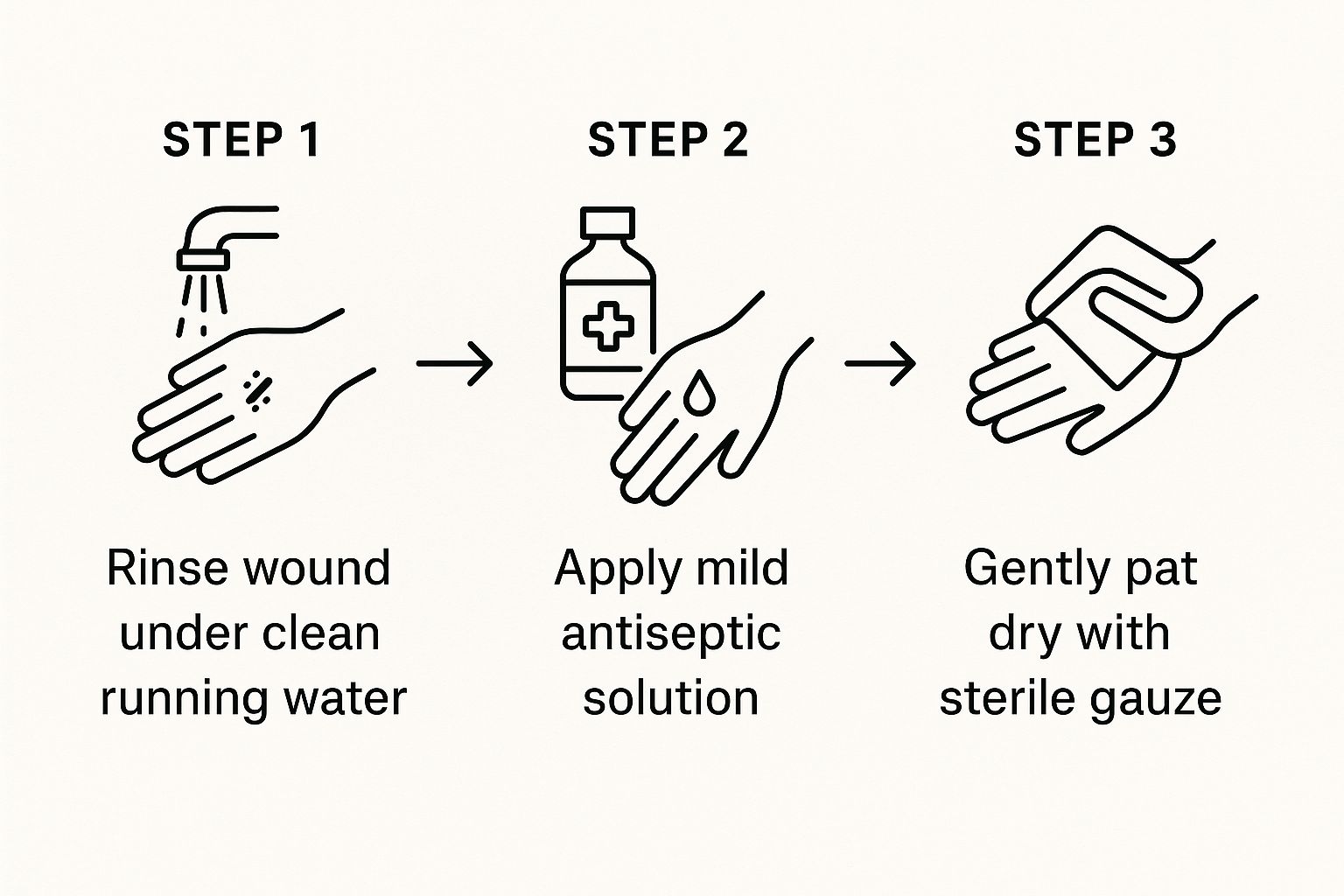
As the visual highlights, a gentle yet effective approach involves flushing with water, using a mild soap, and carefully drying the area. This method works with your body’s healing process, avoiding the aggressive scrubbing that can cause more harm than good.
While many people instinctively reach for strong disinfectants like hydrogen peroxide or rubbing alcohol, wound care specialists often advise against them for open wounds. While they do kill bacteria, they are indiscriminate. They can also destroy the fragile new cells—like fibroblasts and keratinocytes—that are essential for rebuilding tissue. This can set your healing back significantly.
To Clean or Not to Clean: The Great Antiseptic Debate
Choosing the right cleaning solution can feel confusing. You want to eliminate germs, but as we’ve discussed, you don’t want to damage the healing tissue. To clear things up, here’s a look at common options and their real-world impact on healing.
Wound Cleaning Solutions: What Works and What Doesn’t
Expert comparison of wound cleaning options with real-world effectiveness data
| Solution Type | Healing Impact | Best Used For | Common Mistakes |
|---|---|---|---|
| Clean Water & Mild Soap | Excellent. Gently and effectively removes dirt and bacteria without damaging new cells. | Most minor cuts, scrapes, and superficial wounds. | Using harsh, scented soaps or antibacterial soaps that can irritate the wound. |
| Saline Solution | Excellent. Mimics the body’s natural fluids, making it non-irritating and incredibly safe for all wound types. | Rinsing deeper wounds, sensitive areas, or for ongoing dressing changes. | Making a homemade solution with incorrect salt-to-water ratios, which can be irritating. |
| Hydrogen Peroxide | Poor. Can damage healthy fibroblast cells, significantly delaying the healing process. | Disinfecting intact skin around a wound, but never the wound bed itself. | Pouring it directly into an open cut and assuming the fizzing means it’s working effectively. |
| Rubbing Alcohol | Very Poor. Extremely harsh, causes significant cell death, intense pain, and dries out tissue. | Sterilizing tools (like tweezers) or intact skin far away from the wound area before a procedure. | Applying it directly to a cut or scrape, which severely damages tissue and impedes healing. |
As the table shows, the best approach is often the simplest. For most common injuries, a thorough rinse with clean, lukewarm water is the gold standard. This physically removes the majority of contaminants without causing harm. Afterward, applying a thin layer of an antibiotic ointment can help prevent infection in the early stages, but it’s crucial to follow up with a proper wound dressing that maintains a moist environment. Your actions in these first golden hours lay the entire foundation for a speedy and successful recovery.
Modern Dressing Secrets That Transform Recovery Speed
Let’s bust a common myth right away: the old advice to let a wound “air out” and form a scab is a thing of the past. Think of it like putting butter on a burn—we just know better now. Modern medicine has shown that the secret to how to heal a wound faster is maintaining a consistently moist environment. A scab is your body’s emergency shield, but it actually slows down the new cells trying to migrate and repair the damage. Advanced dressings are designed to skip the scab phase entirely, which can seriously speed up your recovery time.
This isn’t just a small-time tip; it’s the foundation of professional wound care. The global wound care market was valued at an incredible $33.13 billion in 2023 and is only getting bigger. This growth is fueled by advanced products like hydrocolloid dressings that are proven to shorten healing time by creating the perfect environment for your cells to work. If you’re interested in the science behind it, you can read more about these market trends and innovations and see how technology is changing how we heal.
Choosing the Right Dressing for the Job
Staring at the first-aid aisle in a pharmacy can feel a bit much, but it gets a lot simpler when you know what each type of dressing is for. Think of them as different tools for different stages of the healing process.
- Hydrocolloid Dressings: These are the real heroes for creating a moist healing space. They form a soft, gel-like bubble over the wound, keeping it insulated, moist, and safe from bacteria. They’re perfect for clean cuts and scrapes that aren’t oozing too much. A huge plus is that you can often leave them on for several days, which means less fuss and more uninterrupted healing.
- Foam Dressings: If you have a wound with more drainage, these are your go-to. They’re designed to soak up excess fluid while still keeping the wound bed moist. This prevents the skin around the wound from getting soggy and breaking down. They are a great choice for deeper scrapes or wounds that are weeping.
- Transparent Film Dressings: These are thin, flexible sheets that act like a second skin. They’re waterproof, so you can shower with them on, but they’re also breathable, which lets oxygen in. These are excellent for covering minor cuts, holding other dressings in place, or protecting skin in areas that get a lot of friction.
Applying a dressing correctly is just as important as choosing the right one. This image from the Mayo Clinic shows the basic technique for a simple adhesive bandage.
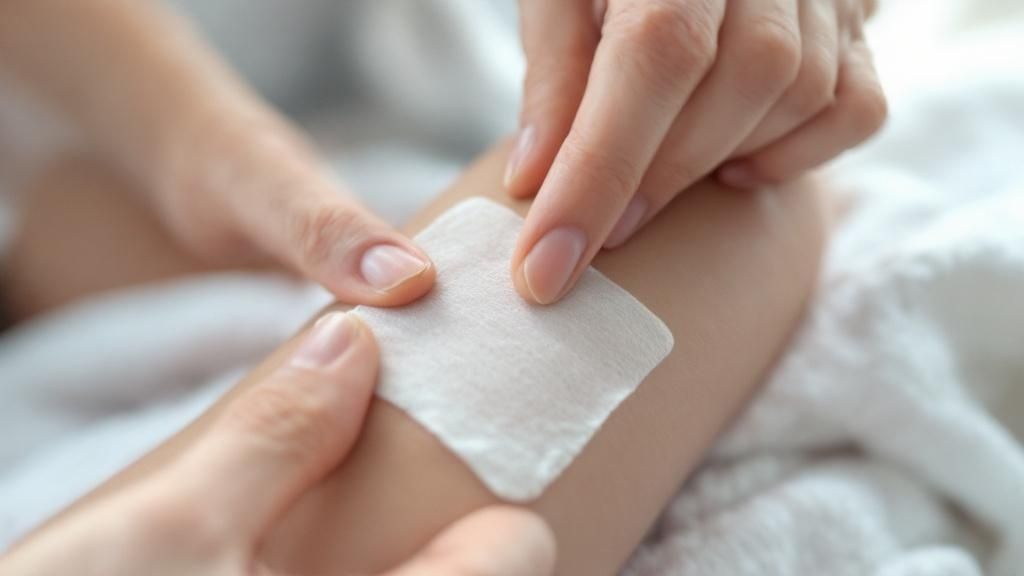
The main goal is to make sure the sticky part adheres to clean, dry skin, and the non-stick pad completely covers the wound. This creates a barrier against dirt, bacteria, and friction.
From Pharmacy to Professional Care
While these over-the-counter dressings are great for home use, they stem from principles perfected in advanced medical care. The old method of packing a wound with dry gauze and then ripping it off—a practice called wet-to-dry dressing—is now strongly discouraged. Why? Because when you pull off the dressing, you also tear away the healthy new tissue that was trying to grow. For anyone curious about this shift, you can learn more about the evolution of dressing changes and see why modern methods are far superior.
A simple phrase that wound care specialists live by is: “If it’s wet, dry it; if it’s dry, wet it.” This means you should choose a dressing that will either absorb moisture from a weeping wound or add moisture to a dry one. By matching the dressing to what your wound needs, you give your body’s natural repair system the best possible conditions to do its job quickly and effectively.
Fuel Your Body’s Healing Engine From the Inside Out
While keeping a wound clean and properly dressed sets the stage for healing on the outside, what you put inside your body is just as crucial. Think of your body as a construction site. You can have a perfect blueprint (your DNA) and a clear, protected work area (a clean wound), but if the supply trucks don’t deliver the raw materials—like lumber, concrete, and wiring—the project will stall. For your body, those essential materials are nutrients. To truly speed up wound healing, you have to actively fuel your internal repair crews.

This goes beyond just “eating a little healthier.” It’s about strategically supplying the specific vitamins, minerals, and macronutrients that are directly involved in rebuilding tissue. Many people accidentally slow down their own recovery simply by not adjusting their diet to meet the new, higher demands of the healing process.
The Nutritional Building Blocks of Recovery
After an injury, your body’s need for certain nutrients can skyrocket. Meeting this demand can mean the difference between a wound that closes up quickly and one that stubbornly lingers for weeks. Research has shown that a lack of key vitamins can significantly delay healing. For example, a Vitamin C deficiency can cripple collagen synthesis, the process that creates the very framework for new tissue.
Likewise, protein isn’t just for bodybuilders; it’s fundamental to every phase of wound repair, from creating immune cells that fight infection to forming new skin. It’s like trying to build a brick wall without enough bricks—it’s simply not possible. Your body faces the same problem when trying to heal without enough protein. To get the best results, focus on incorporating specific, high-impact nutrients into your meals.
To help you get started, here’s a table outlining the most important nutrients, how much you need, and the best places to find them.
Healing Nutrients: Daily Requirements and Power Sources
Essential nutrients for faster wound healing with optimal daily amounts and best food sources
| Nutrient | Healing Dose | Top Food Sources | How It Helps |
|---|---|---|---|
| Protein | 1.2-1.5 g per kg body weight | Lean meats, fish, eggs, beans, lentils, tofu | Provides amino acids for cell growth and tissue repair. |
| Vitamin C | 500-1,000 mg | Citrus fruits, bell peppers, broccoli, strawberries | Crucial for forming collagen and boosting immune function. |
| Zinc | 15-30 mg | Oysters, beef, pumpkin seeds, chickpeas | Acts as a catalyst for enzymes involved in skin repair. |
| Vitamin A | 10,000-25,000 IU | Sweet potatoes, carrots, spinach, kale | Supports the inflammatory response and cell turnover. |
Remember, these doses are higher than standard daily recommendations because your body is in overdrive. Always check with your doctor before starting any high-dose supplements, especially if you have underlying health conditions.
Beyond the Plate: Lifestyle Factors That Accelerate Healing
Nutrition is a cornerstone, but your daily habits also play a massive role. Chronic stress, for example, floods your body with the hormone cortisol, which can suppress the immune system and slow down the inflammatory response your body needs to kickstart healing. Finding ways to manage stress—whether it’s through light exercise, meditation, or just getting enough rest—can have a direct, positive impact on your recovery time.
Sleep is another non-negotiable. It’s during deep sleep that your body releases growth hormone, which is critical for tissue repair. Aiming for 7-9 hours of quality sleep per night gives your internal construction crews the dedicated time they need to work without interruption.
Finally, don’t forget to stay hydrated. Water is essential for transporting all those helpful nutrients to the wound site and flushing out waste products. By combining a nutrient-dense diet with supportive lifestyle habits, you create a powerful internal environment that empowers your body to rebuild and recover at its full potential.
Home Remedies That Actually Speed Healing (Plus Dangerous Myths)
When you’re hurt, a quick search online for healing tips can feel like navigating a minefield. It’s filled with advice ranging from scientifically sound to downright dangerous. While your first-aid kit is always the first line of defense, some natural remedies, used correctly, have genuine healing properties. The trick is knowing which ones to trust and which popular “cures” can actually make things worse.

This isn’t just a concern for kitchen cuts. Finding better ways to heal is a major global focus. In fact, the worldwide market for wound care management was valued at around $30 billion in 2023. This massive number highlights just how critical effective treatments are on a large scale. You can discover more about the global wound care market to see the full scope of this health challenge. By adding proven home strategies to your routine, you can support your body’s natural healing power.
Nature’s Helpers: Remedies With Real Science
Not every “natural” fix lives up to its reputation. However, a few have proven so effective they are now used in clinical settings. These remedies work because they have specific properties that create the best possible environment for your body to repair itself.
Here are a few that have solid scientific backing:
- Medical-Grade Honey: We’re not talking about the honey bear in your pantry. Medical-grade honey, like Manuka honey, is specifically sterilized for clinical applications. It’s a true workhorse, offering natural antimicrobial effects, reducing inflammation, and maintaining a moist, acidic environment that helps new tissue grow while starving bad bacteria. It’s so reliable that you’ll find it in advanced wound dressings used in hospitals.
- Aloe Vera: The gel from the aloe plant is famous for taking the sting out of sunburns, but its healing abilities run deeper. It contains compounds that reduce inflammation, combat certain bacteria, and boost the production of collagen—the essential protein that forms the structure for new skin. Applying pure aloe vera gel can be especially soothing for minor burns and superficial cuts.
- Tea Tree Oil: Recognized for its powerful antimicrobial and anti-inflammatory properties, tea tree oil can be a great ally in keeping a wound clean. But be careful—it’s incredibly potent and must be diluted with a carrier oil, like coconut or almond oil. Apply the diluted mixture only to the skin around the wound to avoid causing irritation to the delicate healing tissue.
Myths to Avoid: The “Remedies” That Do More Harm Than Good
Knowing what not to do is just as important as knowing what helps. Some widely shared home “cures” are not only useless but can actively damage healing skin and create a perfect opportunity for infection. If your goal is to figure out how to heal a wound faster, avoiding these myths is a vital first step. For more on this, our guide on how home wound care speeds up recovery offers additional insights.
Dangerous Home “Cures” and Why They Fail
| Dangerous Myth | The Common Belief | The Harmful Reality |
|---|---|---|
| Hydrogen Peroxide | The fizzing must mean it’s killing all the germs and cleaning the wound. | It’s a non-selective agent. It destroys the healthy new cells (fibroblasts) your body needs for repair just as easily as it kills bacteria, which dramatically slows down healing. |
| Butter or Oil on Burns | It will soothe the burn and create a protective barrier. | This is a terrible idea. It actually traps heat in the skin, which can make the burn deeper and more severe. Plus, it significantly raises the risk of infection. |
| Letting it “Air Out” | Exposing a wound to the open air helps it dry and form a scab more quickly. | A dry wound is a slow-healing wound. The new cells needed for repair can’t move easily across a dry surface. A moist, covered environment is proven to help wounds heal faster and with less scarring. |
When Home Care Isn’t Enough: Advanced Healing Options
Sometimes, you can do everything right—keeping a wound clean, changing the dressing, and eating well—but it just won’t heal. It’s a frustrating and sometimes scary situation. Knowing when to switch from home care to professional help is a key part of learning how to heal a wound faster and avoid serious problems down the road. If you see little to no progress after a couple of weeks, or if a wound has been open for more than 30 days, it’s now considered a chronic wound. That’s your cue to see a specialist.
You also need to be on the lookout for more immediate red flags. If the pain is getting worse, you notice a bad smell, or see yellowish or greenish pus, these are signs an infection could be setting in. The same goes for spreading redness around the wound. If you spike a fever or get the chills, your body is fighting a bigger battle that needs a doctor’s attention right away.
Seeing a Specialist: What to Expect
When you visit a wound care specialist, their first job is to figure out why the wound isn’t healing. They’ll dig deeper than just the surface-level problem, checking for things like poor circulation, other health conditions, or even nutritional gaps that might be slowing things down. It’s surprising how many factors can get in the way of your body’s natural ability to repair itself. This guide on caring for wounds shows a good range of issues a doctor might investigate.
A specialist can offer treatments that are simply not available for at-home use. Of course, even after you get professional help, how you manage the wound at home is still crucial. For guidance on this, our article on effective post-discharge wound care at home offers some great tips for that transition.
Cutting-Edge Treatments That Accelerate Recovery
For wounds that are particularly stubborn, doctors have some powerful options to give your body the boost it needs. These treatments are designed to overcome whatever is holding back the healing process.
- Wound Debridement: This is a common starting point for a chronic wound. A specialist will carefully remove any dead or infected tissue from the wound. Think of it as clearing the construction site so a new, healthy foundation can be built.
- Hyperbaric Oxygen Therapy (HBOT): This involves breathing pure oxygen in a special pressurized room. The increased pressure helps your blood carry much more oxygen to the wound, basically supercharging the cells that are working to repair the tissue.
- Platelet-Rich Plasma (PRP) Therapy: This advanced treatment uses your own body’s healing power. A small amount of your blood is spun in a machine to concentrate the platelets, which are packed with growth factors. This powerful plasma is then applied to the wound to jumpstart tissue regeneration.
- Negative Pressure Wound Therapy (NPWT): You might hear this called a “wound vac.” A special foam dressing is placed over the wound and connected to a small pump. The device creates a gentle suction that removes extra fluid, reduces swelling, and physically helps pull the wound edges together to close it faster.
These advanced treatments are often covered by insurance, especially when a wound is officially labeled as chronic. By recognizing the warning signs and knowing what professional help is out there, you can stay in control of your recovery and give even the toughest wounds a real chance to finally heal.
Your Personal Fast-Healing Action Plan
Knowing all the science is one thing, but turning that knowledge into a practical roadmap is how you’ll actually heal a wound faster. A personalized plan isn’t about blindly following a list of rules; it’s about matching the right actions to your specific injury, lifestyle, and unique needs. Whether you’re recovering from surgery, a sports injury, or a stubborn chronic wound, tailoring your approach is what truly makes a difference. Let’s build a plan you can start using today.
Building Your Customized Healing Checklist
Every wound tells a different story. A clean surgical incision needs a different kind of care than a scraped knee from a fall. The first thing you need to do is figure out which strategies will give you the most bang for your buck, so to speak. A simple checklist based on your situation is a great place to start.
For a minor cut or scrape, your checklist might be short and sweet:
- Clean the wound once with mild soap and water—no need for harsh chemicals.
- For the first day or two, apply a thin layer of antibiotic ointment.
- Cover it with a good-quality dressing, like a hydrocolloid or transparent film type.
- Only change the dressing when it starts to leak or the edges peel away.
- Give your body a little boost by eating more vitamin C-rich foods, such as oranges and bell peppers.
For a deeper or more significant wound, like a post-surgical site or a sore that just won’t quit, your plan will need to be more detailed:
- Follow your doctor’s cleaning instructions to the letter.
- Use the specific advanced dressing they recommended (like foam or an antimicrobial one).
- Make protein a priority, aiming for 1.2 to 1.5 grams per kilogram of your body weight to fuel tissue repair.
- Talk to your provider about supplementing with Vitamin C and Zinc.
- Aim for 7-9 hours of quality sleep every night, as this is when your body does its best repair work.
- Find ways to manage stress, whether it’s a short walk or practicing some simple relaxation techniques.
Tracking Progress and Adjusting Your Plan
Healing is an active process, and you have to be an active participant. You don’t need fancy equipment to track your progress; just pay attention to the signs your body is giving you. A wound that’s on the right track will show slow but steady improvement. Within a few days, you should see less redness, swelling, and pain. New, pinkish tissue should begin to appear around the edges.
There’s a great saying in wound care: “If it’s wet, dry it; if it’s dry, wet it.” This simply means that if your wound is weeping a lot, you probably need a more absorbent dressing, like a foam one. If it looks too dry and tight, a hydrocolloid dressing can help create that ideal moist environment. Don’t hesitate to adjust your dressing choice based on these daily observations. You can find more in-depth strategies in our guide on at-home wound care. If a wound isn’t showing any signs of closing up after a week, that’s your cue to call a professional. Celebrating small wins, like less swelling or the first hint of new skin, can also be a great motivator during a long recovery